
We all know that whenever budgets tighten, anything deemed soft or non-essential is the first to get shelved.
If employee wellbeing is just pitched as lunchtime yoga or free fruit in the break room, executives will rightly question its value. The issue is not that business leaders lack empathy, or that these interventions aren’t helpful. The problem is that organisations treat employee wellbeing as an emotional perk rather than operational infrastructure.
If you want sustained executive backing, we need to move the conversation toward getting a greater return from employee wellbeing.
The stakes are enormous. Every business is competing fiercely for exceptional talent. When an experienced colleague quits, they leave behind depleted morale, project disruption, and productivity losses across the entire team. Replacing a single skilled professional costs between 50% and 200% of their annual salary once recruitment, onboarding, and lost momentum are factored in.
Wellbeing is not a decorative badge of honour. It is the most effective talent retention and attraction lever an organisation possesses, and you’re already investing in it.
Most companies don’t suffer from a lack of investment. They suffer from an absence of cohesion.
UK employers waste up to £15 billion every year on benefits packages that colleagues barely understand and rarely use. There’s no one supplier that solves every need, and every supplier you bring in creates a web of access confusion.
This dynamic creates the Wellbeing Void. It is the silent space where spend disappears into workforce cynicism. Colleagues slide into chronic exhaustion, managers struggle without guidance, and the chief executive wonders why absence figures keep climbing.
Rushing to leadership to request extra funds for another shiny app only compounds executive fatigue. Decision-makers do not want more vendor contracts. They want proof that current commitments deliver cultural stability and commercial return.
To secure board-level sponsorship, stop framing wellbeing as an isolated welfare concern. Present it as an operational driver.
Research demonstrates that 82% of chief executives report positive returns from their wellbeing initiatives, crediting them directly with higher output and stronger employee retention. Furthermore, 58% of leaders view workforce wellbeing as vital to commercial success.
The commercial appetite exists, but executives need clear visibility.
Frequency is decisive here. Chief executives who receive regular monthly updates on wellbeing performance are 58% more likely to maintain or increase their backing. An annual survey published months after issues emerge cannot protect the people agenda.
Monthly reporting does not require endless spreadsheets. It demands focused leading indicators. Highlight trends in team stability, showcase early help-seeking rates, and tie workforce engagement directly to operational output.
When leadership sees tangible proof that healthy teams deliver projects faster and stay longer, wellbeing becomes a strategic imperative worthy of more budget.
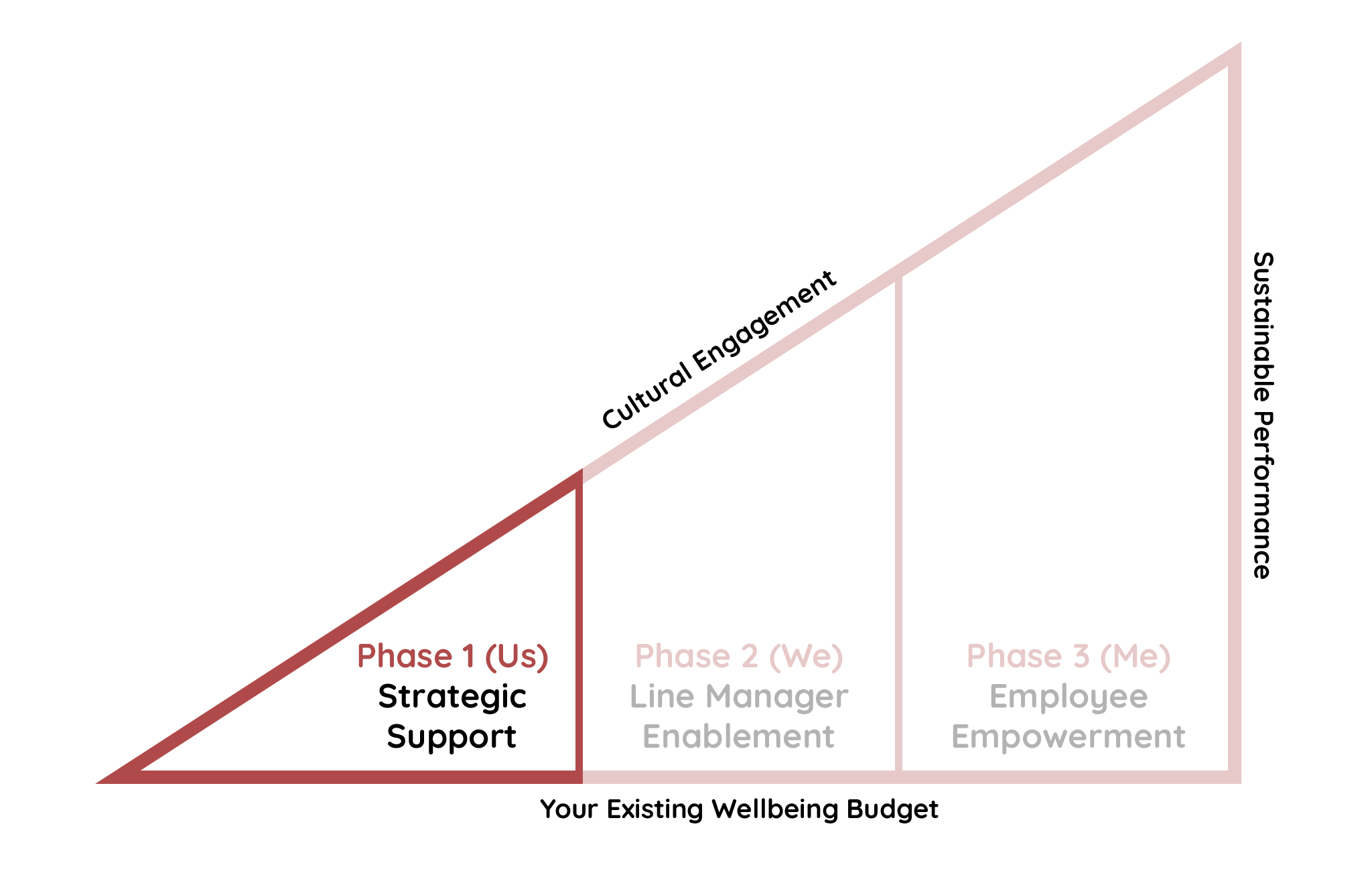
At Joy Junction, we address this challenge through Phase 1 of our Method, focusing on Us, the strategic and structural foundation of the workplace.
Before spending additional money, you first need to have full sight of what you already have. Most employers maintain two pools of support:
We map every service onto a clean, accessible cloud spreadsheet (Google Sheets is awesome for this).
Removing navigation friction transforms adoption instantly. By empowering line managers to signpost on your behalf, and enabling colleagues to find help quickly, engagement surges without adding costs.
This provides the exact commercial credibility needed to win long-term executive trust.
Keeping wellbeing on the chief executive's agenda requires commercial discipline rather than emotive appeals. Whilst “it’s the right thing to do” is absolutely right, it doesn’t make for a very compelling business case.
By eliminating benefits clutter, reporting monthly impact, and linking workforce stability to the bottom line, HR leaders prove that wellbeing is a performance driver. This approach turns an undervalued budget item into a reliable system for getting a greater return from employee wellbeing.
The route to lasting impact does not require a bigger budget. It requires unlocking the hidden power of what you already have.
Stop funding employee benefits that nobody uses. Joy Junction helps executive teams and people leaders in getting a greater return from employee wellbeing without increasing budgets.
Contact us today to begin your Phase 1 strategic audit, and transform your existing provision into an engine for sustainable performance.

.webp)

.avif)
