
Whenever Westminster publishes another review on the state of the British workforce, HR leaders and executives could be forgiven for feeling a bit of cynicism. We’ve seen well-meaning national taskforces come and go, yet the everyday reality inside our organisations remains stubbornly tough.
Right now, 2.8 million working-age people across Britain are locked out of employment due to chronic sickness and disability. That represents a rise of 800 thousand people since 2019, costing our economy a staggering £212 billion annually. Meanwhile, employers lose roughly £120 in daily profit for every sickness absence.
We could help these people back into work if we wanted to, by giving people the flexibility and support that they need.
Sir Charlie Mayfield’s Keep Britain Working review rightly calls our current setup broken. His central proposition, an integrated national Workplace Health System, would aim to bring healthcare, regional bodies, and employers into better alignment.
It is a genuinely welcome ambition, but let’s look at it objectively.
A Workplace Health System designed in Whitehall will mean very little if it just layers more compliance, reporting, and paperwork onto already exhausted organisations. Real workplace health is not won on spreadsheets, it’s decided in the daily experience of work.
If we want this national effort to succeed, we need a joined-up workplace wellbeing strategy that treats policy as an enabler rather than a cure-all.
Research from Simplyhealth reveals that 86% of employers already harbour concerns about implementing health benefits, while nearly a third worry about supporting colleagues with pre-existing conditions. Even worse, 16% of employees have to ask their manager for formal approval before using existing benefits, and 13% find the claiming process far too complex.
At the same time, landmark Oxford University research evaluating 90 employee wellness interventions found that generic perks like mindfulness apps, webinars, and resilience sessions deliver virtually no measurable benefit to mental health. It’s not that these things can’t add value, you just can’t downward dog your way out of unmanageable workloads or toxic team dynamics.
If the new Workplace Health System simply floods businesses with more digital portals and accredited standards, it will become another expensive tick-box exercise.
True health requires addressing the lag between short-term commercial quarters and long-term human wellbeing. That demands a joined-up workplace wellbeing strategy built on distributed responsibility across three distinct tiers.
For the rest of this blog, we’re going to adjust the stakeholders of our Joy Junction Method slightly, because I think it works well here.
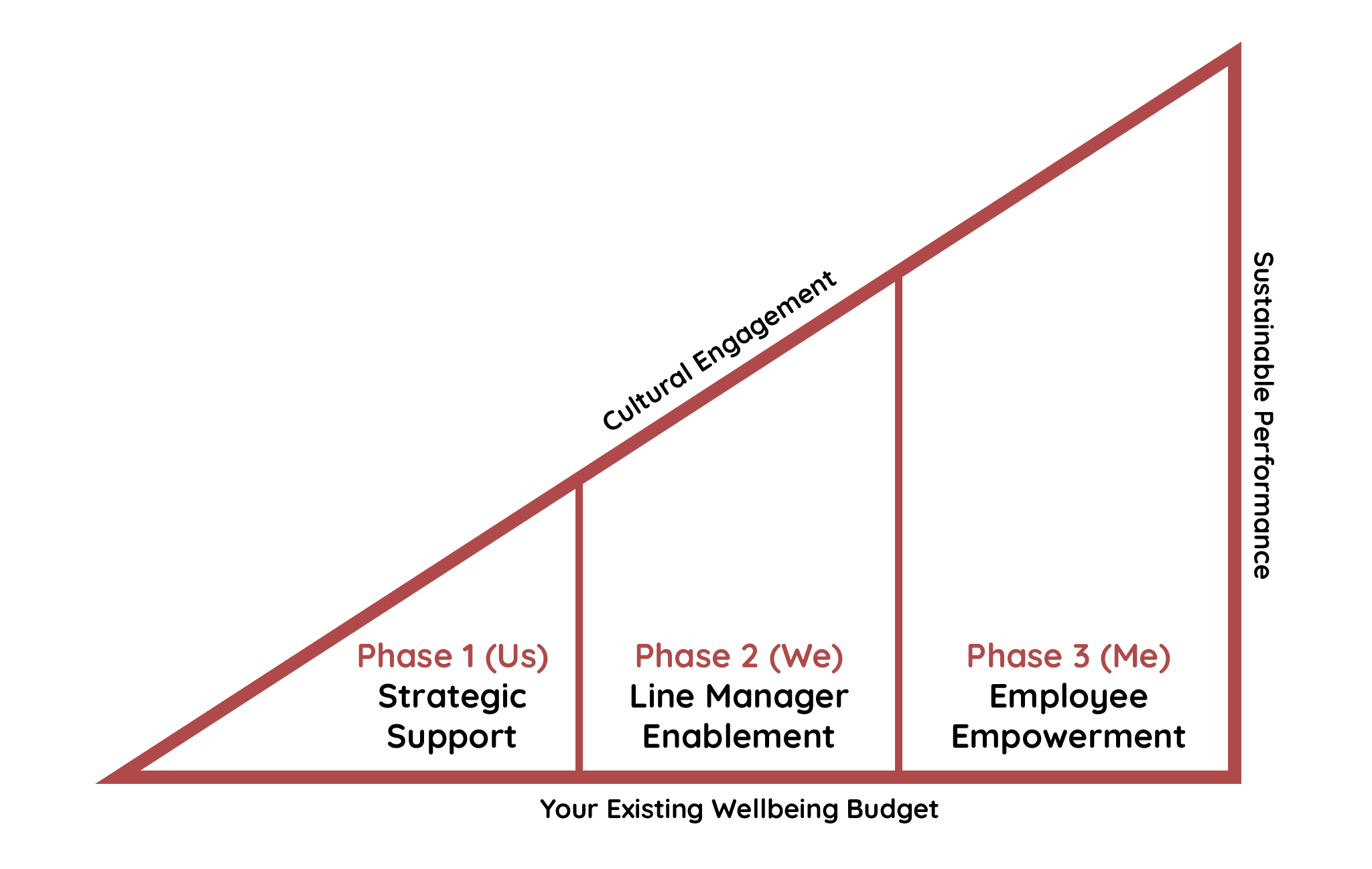
On a national level, the state represents the overarching operating environment. This mirrors Phase One of our Method, which focuses on establishing firm strategic foundations.
Whitehall has a vital structural job to do. Government needs to align tax incentives to reward genuine preventative investment, and implement the proposed Workplace Health Intelligence Unit (WHIU) to gather reliable workforce health data.
However, we must remain clear-eyed about the state's limitations. Sir Charlie Mayfield admitted during the review process that national government can’t take responsibility for improving line management capability across every workplace in Britain, and nor should it.
Ministers can draft standards, but they can’t legislate empathy. Government's job in this Workplace Health System is to clear away legislative obstacles and create fair incentives, leaving room for employers to build cultures where staying connected to work is protective of dignity.
Moving into regional networks, mayoral combined authorities and local / sector groups form the critical middle tier.
This aligns with Phase Two of our framework, which champions team enablement and shared connection. For the types of organisations that we work with, think regional Councils, Universities HR (UHR), Integrated Care Boards, and Anchor Groups, for example.
This is where the Workplace Health System could deliver genuine objective value. While large corporations can more easily afford bespoke occupational health departments, only 18% of small businesses have access to similar provision. Small and medium enterprises employ the majority of our workforce, yet they are routinely priced out of early clinical triage.
Regional coalitions, such as Greater Manchester’s Good Employment Charter or regional occupational health hubs in Yorkshire, prove that pooling resources works. By sharing access to early musculoskeletal physio, mental health pathways, and return-to-work mediation, regional bodies prevent smaller employers from being left behind.
These local coalitions ensure that a joined-up workplace wellbeing strategy provides practical community infrastructure rather than just top-down requirements.
Don’t get me wrong though, this recommendation just as easily applies to larger organisations, too.
Finally, we arrive at the individual organisation. In our Joy Junction framework, this is Phase Three, where high-level strategy translates into the lived experience of everyday colleagues.
This is where grand policy meets the messy, human reality within our organisations.
A brilliant quote captured during the Keep Britain Working review came directly from an employee who observed that if they had a great line manager, they would not need corporate wellbeing support, and if they had a bad line manager, they wouldn’t want it.
That simple truth cuts through the noise for me. You can build the most advanced Workplace Health System imaginable, but if a team member's immediate supervisor is defensive, disengaged, or drowning in administrative overload, that colleague will eventually burn out and walk away.
Instead of hunting for additional budget to buy more wellbeing tech, organisations must first audit what they already have. In my experience most businesses sit on an untapped goldmine of primary and secondary support, from employee assistance lines to financial guidance, that sits completely ignored, lost in complicated user journeys.
By mapping these services into an accessible format and equipping managers with practical tools like our Conversation Canvas, interactions transform from cold KPI interrogations into meaningful, two-way conversations.
When leaders act as confident signposters, pointing people to the right service at the right time, psychological safety takes root and preventable absences drop.
The Keep Britain Working review offers a promising blueprint, but only if business leaders view it objectively.
We don’t need another layer of glossy corporate cheerleading or detached legislated bureaucracy. We need an honest partnership where government fixes structural rules, regional networks supply shared preventative services, and organisations focus on the human side of leadership.
A joined-up workplace wellbeing strategy succeeds when it stops chasing cosmetic perks and starts creating environments where work replenishes energy rather than drains it.
Are you ready to audit your existing wellbeing provision and build a sustainable culture without demanding more budget from your board?
Through the Joy Junction Method, we help organisations see greater return on their existing employee wellbeing investments, without increasing your budgets.
Reach out to us today.

.webp)

.avif)
